What is Cloves

Cloves are a spice that come from the dried flower buds of a tree called Syzygium aromaticum. The tree grows in tropical areas like Indonesia, India, and Madagascar. These little brownish, nail-shaped buds have a strong, warm flavor that’s a mix of sweet and spicy. They’re often used in cooking, especially in dishes like stews, curries, and even baked goods. You might also find them in drinks like mulled wine or chai tea. Aside from flavor, cloves have been used for centuries in medicine because they contain eugenol, a compound that has antibacterial and pain-relieving properties. The scent is very powerful, so even just a little bit can go a long way in flavoring food. Some people even use clove oil for toothaches or to help with digestion.
Other Names of Cloves
Cloves are known by a few different names around the world, and each one gives a little insight into where they’re used or how they’re seen. Here’s a list of other names for cloves:
- Laung – In India, cloves are often called “laung.” This name is used in many Indian recipes, especially in spices mixes like garam masala.
- Clove Buds – Sometimes, cloves are just referred to as “clove buds” since they are the unopened flower buds of the clove tree.
- Kreichm – In some parts of Eastern Europe, people might refer to cloves as “kreichm” or something similar in local dialects.
- Syzygium Aromaticum – This is the scientific name for cloves. It’s not often used in daily conversations but comes up when you’re reading about plants or herbs in botanical terms.
- Eugenia Clove – Since cloves come from the Eugenia tree family, sometimes they’re called by this name, especially in scientific or herbal contexts.
Each name gives a bit of a different perspective on this little spice that packs a big punch.
Nutritional Value of Cloves
Here is the approximate nutritional value of cloves per 100 grams:
| Nutrient | Amount per 100g |
|---|---|
| Calories | 274 kcal |
| Water | 9.87 g |
| Protein | 5.97 g |
| Carbohydrates | 72.65 g |
| Dietary Fiber | 35.3 g |
| Sugars | 2.38 g |
| Total Fat | 13 g |
| Saturated Fat | 3.3 g |
| Monounsaturated Fat | 6.6 g |
| Polyunsaturated Fat | 1 g |
| Cholesterol | 0 mg |
| Sodium | 277 mg |
| Potassium | 1024 mg |
| Calcium | 632 mg |
| Iron | 11 mg |
| Magnesium | 259 mg |
| Phosphorus | 104 mg |
| Zinc | 2.32 mg |
| Vitamin C | 11.7 mg |
| Thiamine (B1) | 0.221 mg |
| Riboflavin (B2) | 0.13 mg |
| Niacin (B3) | 1.347 mg |
| Vitamin B6 | 0.275 mg |
| Folate (B9) | 63 µg |
| Vitamin A (IU) | 622 IU |
| Vitamin E | 8.82 mg |
Please note that these values are approximate and can vary based on factors such as growing conditions and processing methods. Cloves are often used in small quantities in recipes, so actual intake may be lower than the values presented here.
Benefits of Cloves
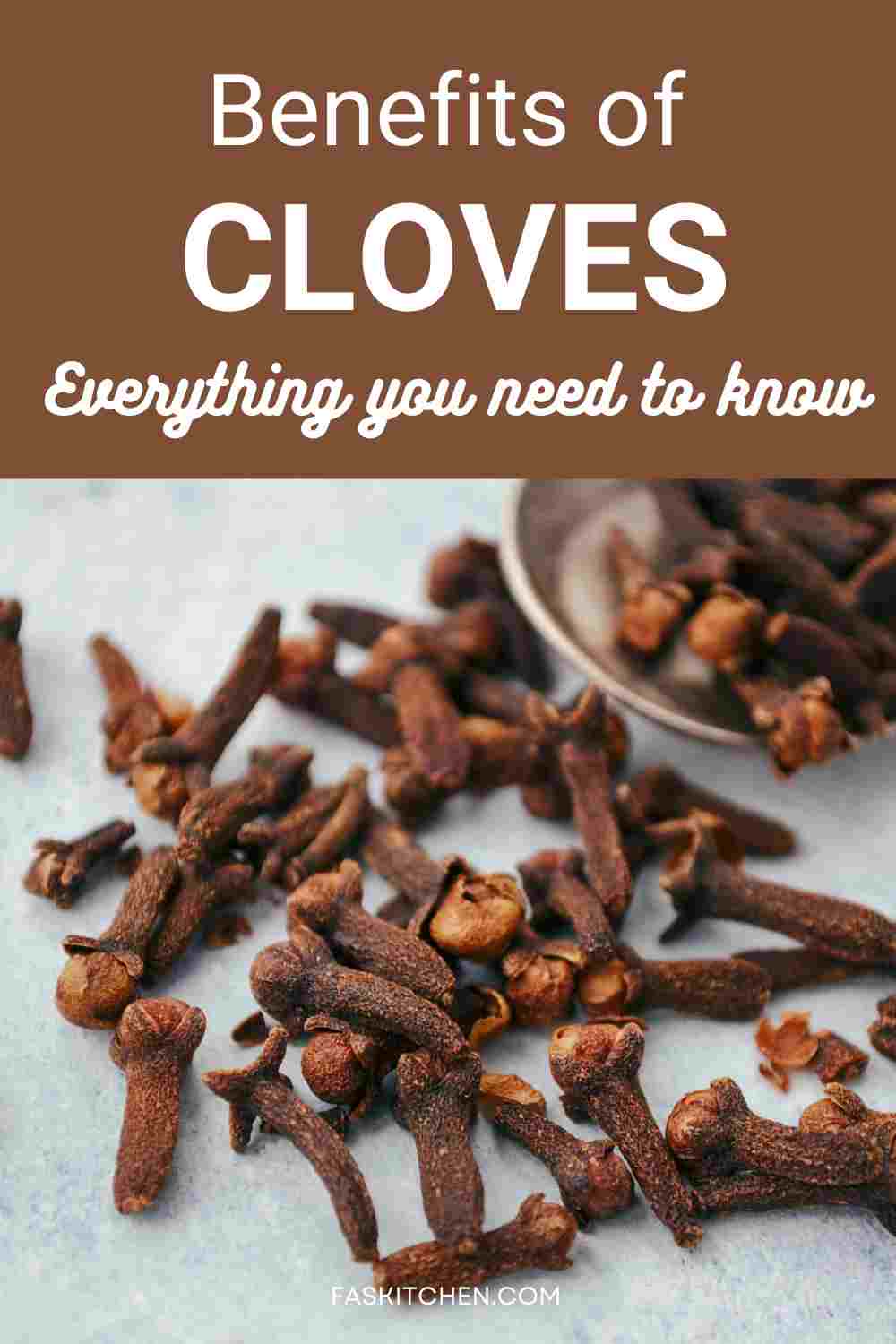
Cloves aren’t just a flavorful spice, they also come with a lot of benefits that people have been using for centuries. Here’s a list of some of the top benefits of cloves:
- Boosts Immune System – Cloves have a lot of antioxidants, which help your body fight off infections. Eating a little bit of cloves can support your immune system and keep you healthier.
- Helps With Digestion – If you ever feel bloated or have an upset stomach, cloves can be your friend. They help with digestion by stimulating the production of digestive enzymes, so your stomach works better.
- Pain Relief – Cloves contain eugenol, which is known for its pain-relieving properties. It can help reduce pain, especially toothaches. Some people use clove oil directly on the sore tooth or gums.
- Good For Oral Health – Because of their antibacterial and anti-inflammatory properties, cloves are great for your teeth and gums. They help fight bad breath and can even prevent gum disease.
- Improves Blood Circulation – Cloves can help improve blood flow, which means more oxygen gets to your organs and muscles, making you feel more energized and healthy.
- Helps With Respiratory Issues – Cloves can clear up mucus and ease coughing. They’re often used in tea or inhaled through steam to help with colds or congestion.
- Regulates Blood Sugar – Some studies suggest that cloves can help balance blood sugar levels, making them beneficial for people with diabetes or those trying to manage their blood sugar.
Cloves may be small, but they sure pack a punch when it comes to benefits.
Varieties of Cloves
There aren’t too many “varieties” of cloves in the way you might think of different types of fruits or vegetables, but there are some different ways cloves are grown and prepared around the world. Here’s a look at what you might find when it comes to cloves:
- Maluku Cloves – These cloves come from the Maluku Islands in Indonesia, often known as the Spice Islands. They’re considered some of the highest quality cloves and have a rich, strong flavor. These are usually the ones you’ll find in stores or used in cooking.
- Zanzibar Cloves – Grown in Zanzibar, off the coast of Tanzania, these cloves are known for their slightly milder taste compared to the Maluku ones. They’re still rich but with a little less punch.
- Sri Lankan Cloves – These cloves are grown in Sri Lanka and are known for their strong aroma and slightly sweet flavor. They are often used in perfumes and also in cooking in the local cuisine.
- Clove Buds – This is not really a different “variety,” but it’s worth mentioning that cloves are typically harvested as buds before they bloom into flowers. Depending on how they’re dried, they can have subtle differences in taste and quality.
- Clove Oil – Though not a variety of cloves themselves, clove oil is a key product made from distilling the buds. It’s concentrated and often used for medicinal purposes or as an essential oil, offering the same flavor but in a much stronger form.
While most cloves share that signature spicy-sweet flavor, these different sources and preparations can give you a slight variation in taste and strength depending on where they come from.
What Does Cloves Taste Like
Cloves have a really strong and unique taste that can be hard to miss. They’re warm, sweet, and spicy all at the same time. The flavor has a bit of a kick to it, but it’s not sharp like some other spices—more like a deep, comforting heat. There’s also a slight bitterness, but it’s balanced out by a hint of sweetness, kind of like cinnamon but with more intensity. If you bite into a whole clove, it can be pretty overwhelming because the taste is so powerful. That’s why it’s usually ground up or used in small amounts when cooking. The scent of cloves is just as strong as the flavor—warm and rich, and it can fill up a whole room when you cook with it.
How To Use Cloves

Cloves are super versatile and can be used in a bunch of different ways, whether you’re cooking, baking, or even making your own home remedies. Here’s a list of ways you can use cloves:
- In Cooking – Cloves are often used to flavor meats, stews, soups, and curries. You can add whole cloves to a pot of soup or stew, then just take them out before serving. They also work well in spice blends like garam masala or curry powder.
- Baked Goods – Cloves are a great addition to baked goods, especially around fall or winter. They’re commonly used in recipes for pies, cakes, and cookies. A little bit of ground cloves adds a warm, spicy kick to things like pumpkin pie or gingerbread.
- In Tea – You can drop a few whole cloves into a cup of hot water, along with other spices like cinnamon or ginger, to make a homemade spiced tea. Cloves give the tea a strong, rich flavor and can be great for digestion.
- Clove Oil – Clove oil is really strong and can be used for things like relieving tooth pain or even soothing sore muscles. Just a drop or two is enough, and you can mix it with a carrier oil like coconut or olive oil if you’re using it on your skin.
- For Aromatherapy – You can use cloves to make a homemade potpourri or add a few to a simmering pot of water on the stove. The smell will fill up your home with a warm, spicy scent.
- Pickling – Cloves are often used in pickling brines. They add a deep flavor to things like pickled onions or cucumbers. Just a couple whole cloves in your jar of pickles can give them a nice, spicy bite.
- Homemade Remedies – People use cloves in all sorts of old-school remedies, like making a clove infusion to help with colds or digestive issues. You can steep a few whole cloves in hot water for a natural way to ease an upset stomach.
Cloves are pretty strong, so even though they’re tasty and helpful in a lot of ways, a little goes a long way.
Substitute for Cloves
If you’re out of cloves or just don’t have them on hand, there are a few good substitutes you can use that will still give your dish that warm, spicy flavor. Here are some options:
- Allspice – Allspice is probably the closest substitute for cloves because it has a similar warm, spicy taste. It’s actually made from the dried berries of a plant, but it combines flavors of cinnamon, nutmeg, and cloves. If you’re using it in a recipe, just swap it in at a 1:1 ratio.
- Cinnamon – Cinnamon has a sweet and spicy flavor that’s close to cloves, but it’s a bit milder. If you’re making something like a dessert or a warm drink, you can use cinnamon as a substitute. It won’t have that clove bitterness, but it’ll still give you that cozy, spiced taste.
- Nutmeg – Nutmeg is another good substitute. It has a warm, nutty, slightly sweet flavor, though it’s not as intense as cloves. It works well in baking or in drinks like eggnog or spiced cider. You can use nutmeg in equal amounts to replace cloves.
- Ginger – Ground ginger won’t taste exactly like cloves, but it’s another spicy option. It’s a bit more sharp and peppery, so it can add some heat and warmth to your dish. Use half the amount of ginger as you would cloves to keep it from overpowering the flavor.
- Cardamom – Cardamom has a unique taste that combines sweet and spicy, kind of like cloves but with a hint of citrus. It’s a little more floral, but it can still work well in both savory and sweet dishes. Use about the same amount as cloves, though you might want to taste as you go.
- Clove Oil – If you’re in a pinch and need cloves for their flavor but don’t have the ground spice or whole cloves, you can use clove oil. It’s super concentrated, so just a drop or two will be enough to add that familiar taste. Be careful with how much you use since it’s so strong!
- Pumpkin Pie Spice – This is a blend of spices, usually including cinnamon, nutmeg, and sometimes ginger and cloves. If you’re baking or making something like a fall-inspired dish, pumpkin pie spice can step in for cloves without changing the overall flavor too much.
Remember, all of these substitutes will give a slightly different taste, so it’s good to choose one based on what kind of flavor you’re aiming for in your dish. A little experimenting can help you find the right balance.
Where to Buy Cloves
Cloves are a common spice, so you shouldn’t have too much trouble finding them. Here’s where you can buy them:
- Grocery Stores – Most regular grocery stores carry cloves, usually in the spice aisle. You’ll find them either whole or ground, depending on what you need. Big chain stores like Walmart, Kroger, or Target typically have them in stock.
- Specialty Food Stores – If you’re looking for high-quality or more unique cloves, try specialty stores. Places like Whole Foods or Trader Joe’s often have a good selection of spices, and you might find organic or fresher options.
- Online Retailers – If you can’t find cloves locally or want to buy in bulk, online shopping is always an option. Websites like Amazon, iHerb, or even spice-specific sites like Penzeys Spices offer a wide variety of cloves, including whole cloves, ground cloves, or clove oil.
- Health Food Stores – Since cloves are used in many natural remedies, health food stores or herbal shops often stock them. You might even find clove oil or clove capsules here for medicinal uses.
- Ethnic or International Markets – Stores that specialize in Indian, Middle Eastern, or Southeast Asian foods are great places to find cloves. These spices are used a lot in their cooking, so you’ll often find them in bulk at a lower price than at regular grocery stores.
- Farmers’ Markets – Some farmers’ markets or local spice vendors might sell cloves, especially during the fall when people are buying more spices for baking. It’s worth checking out if you have one nearby.
- Spice Shops – If you want something specific like freshly ground or organic cloves, a spice shop can be a great choice. These shops usually have a wider selection of spices, and the staff can often help you pick exactly what you need.
Cloves are pretty easy to find, but if you’re looking for something specific like organic or high-quality options, a little extra effort in searching might get you the best choice.
How To Store Cloves

Storing cloves the right way can keep them fresh for a long time, so you don’t lose that amazing flavor.
1. Airtight Containers
Cloves are best stored in airtight containers because exposure to air can cause them to lose their flavor and aroma over time. If you’re using a glass jar or plastic container, make sure the lid fits tightly and seals completely. This prevents air, moisture, and odors from getting in. Glass jars with tight-fitting lids (like mason jars) or plastic spice containers are both good options. It’s also a good idea to avoid containers that are clear, since light can degrade the spice and cause it to lose its potency faster. If you can, choose dark or opaque containers.
2. Cool, Dark Location
Light and heat are two of the biggest enemies of spices. Cloves should be stored in a cool and dark place, like a cupboard or pantry, where they won’t be exposed to direct sunlight or heat from appliances. Heat speeds up the breakdown of essential oils, which are responsible for the intense flavor of cloves. The temperature in the storage area should ideally be between 60-70°F (15-21°C). Avoid placing cloves above the stove, near windows, or in places where the temperature fluctuates a lot.
3. Whole Cloves vs. Ground Cloves
Whole cloves last much longer than ground cloves because they retain their oils and flavor better. Whole cloves are sealed inside their outer skin, keeping the flavor trapped longer. When you grind cloves, the essential oils are released and exposed to the air, so ground cloves can lose their potency within 3 to 6 months. If you already have ground cloves, try to use them up fairly quickly for the best taste. However, whole cloves can last much longer—up to 2-3 years if stored properly. So, buying whole cloves and grinding them as needed is a good strategy for long-term use.
4. Moisture Control
Cloves are sensitive to moisture, which can lead to mold or mildew. Keep them away from areas with high humidity—don’t store them in places like near the sink or in damp basements. Moisture can also cause the cloves to lose their natural oils, making them less flavorful. Before storing, always make sure the cloves are completely dry, and check the storage container to ensure it’s free of any moisture or condensation.
5. Labeling
Since cloves are a spice that’s often bought in bulk or stored for a long time, it’s helpful to label the container with the date you bought or opened it. This way, you can track how old they are and ensure you use them before they start losing flavor. Even though whole cloves last a long time, labeling helps you avoid forgetting about them and using them up while they’re still at their best.
6. Freezing Cloves
If you want to store cloves for even longer, freezing them is a great option. The cold can extend their shelf life by months, and cloves will still keep much of their flavor. Place whole cloves (or ground cloves) in an airtight container or a resealable freezer bag to protect them from moisture and freezer odors. The best part? You don’t need to thaw them when you’re ready to use them. You can just take them out of the freezer and grind or use them while they’re still frozen. This is especially helpful if you buy cloves in bulk and won’t be able to use them up quickly.
7. Using Desiccants or Spice Sachets
If you live in a particularly humid area, consider adding a desiccant packet (those little silica gel packets that come in packaging) to your spice container to absorb any moisture. You can also make a small spice sachet with rice or dried herbs that can help absorb moisture inside the jar, though you’d need to replace it every so often to keep it effective.
8. Avoiding Strong Odors
Spices like cloves can absorb odors from their environment, so make sure your storage area is free from strong-smelling foods or chemicals. For example, don’t store cloves near onions, garlic, or cleaning products. Keep them away from anything with a strong odor to maintain their natural, spicy fragrance.
By taking these extra steps to store your cloves properly, you can enjoy their bold flavor and health benefits for a long time. Whether you’re cooking, baking, or using them for their medicinal properties, well-stored cloves will always be ready to add that signature warm, spicy touch to your dishes.
Frequently Asked Questions (FAQs)
What are cloves?
Cloves are the aromatic flower buds of the clove tree (Syzygium aromaticum), native to the Maluku Islands in Indonesia. They are used as a spice in cooking and have medicinal properties.
How do cloves taste?
Cloves have a strong, sweet, and slightly bitter flavor. They are warm, aromatic, and often described as having both sweetness and spiciness.
What dishes are cloves commonly used in?
Cloves are used in a variety of dishes, both sweet and savory. They are common in desserts, spice blends, stews, soups, and pickled dishes.
Can I use ground cloves instead of whole cloves?
Yes, ground cloves can be used as a substitute for whole cloves in many recipes. Keep in mind that ground cloves are more potent, so you may need to adjust the quantity accordingly.
How should I store cloves?
Store cloves in a cool, dark place in an airtight container. This helps preserve their flavor and prevent them from becoming stale.
Are there any substitutes for cloves?
Yes, substitutes for cloves include allspice, cinnamon, nutmeg, cardamom, and combinations of these spices depending on the recipe.
Roberta Mensah says
Thanks for the education. Are cloves used for the treatment of virginal infections and hair growth? If yes, how are they used? Thank you